How I Won the Lovable SheBuilds Hackathon After Starting Over Halfway Through
Liked this episode? Review on Apple Podcasts · Rate on Spotify
Nina Kolari, Founder, Karrot
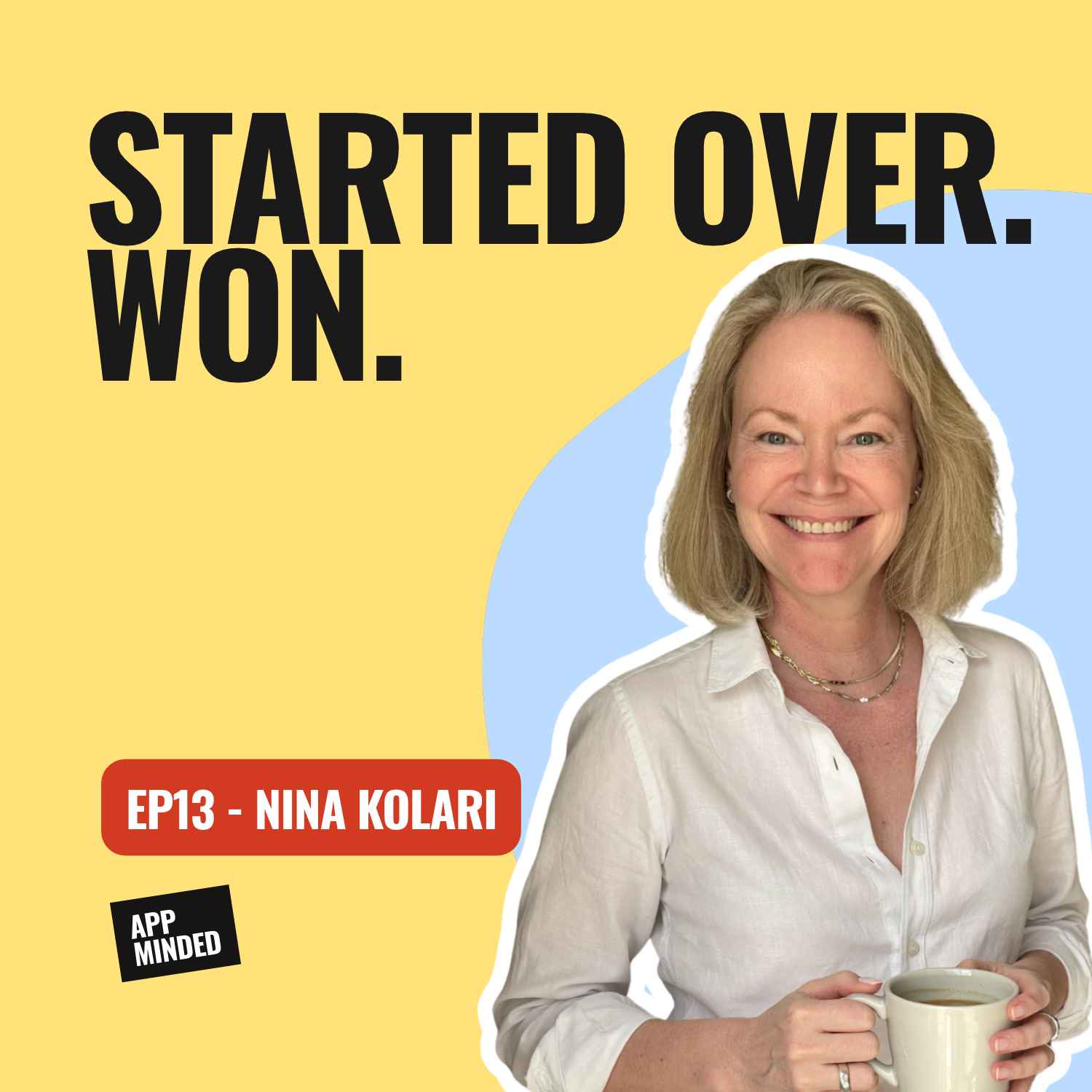
Nina Kolari won her category at Lovable SheBuilds, a 72-hour hackathon for women, with an app she started at hour 36. In this solo episode she explains why she scrapped her original idea halfway through, how she built Karrot inside Lovable with an MCP server, how the winners were chosen, and why more non-technical women should join hackathons.
How do you win a hackathon with an app you started halfway through?
Be ruthless about scope and make every decision once. Nina spent the first 36 of 72 hours on an idea that wasn't working, asked Lovable if she could switch, and started over. She built Karrot from something she already knew deeply: her own checklist for growing an app after launch. With half the time left, she kept everything inside Lovable, made each decision on the spot and moved on. Her app was specific about who it's for, what they use it for and what result they get. That was the same thing the top 30 apps had in common.
Summary
Lovable SheBuilds season four drew over 3,400 applications. Over 900 women built for 72 hours, and 695 submitted an app. Nina had applied twice before without getting in. This time she was accepted, changed her idea at hour 36, and won her category with Karrot (heykarrot.com), an app that turns her post-launch app growth checklist into a tool you can use directly from Claude or ChatGPT through an MCP server.
How she built an app in 36 hours
Drop an idea that isn't working, and ask the organisers early if you're allowed to switch.
Build from knowledge you already have. Karrot is her own Google Sheet checklist turned into an app.
Let Lovable build the app's skeleton while you work on the name and branding.
Keep everything in one tool: Lovable Cloud for the database, Paddle for payments.
Be strict with the AI about what it may and may not build, so it moves fast.
Make each decision once. Pick a colour and never think about it again.
Make the landing page instantly clear: who it's for, how it helps and what the result is.
Put a waitlist up and get complete beginners to beta test before going public.
What is Lovable SheBuilds?
SheBuilds is Lovable's hackathon for women. It's application only: you submit the idea you plan to build, and Lovable decides whether you get in. Nina had applied twice before without being accepted.
Season four was the biggest yet. Over 3,400 women applied, over 900 built for 72 hours, and 695 submitted by the deadline. Nina points out that this is an unusually high finish rate. In most hackathons, only a small share of participants get all the way to submission.
Why join a hackathon?
Nina gives three reasons. A hard deadline forces you to execute instead of procrastinating. She wanted to win: her two earlier hackathon wins were both for iPhone apps, and SheBuilds let her show she builds web apps too. And she had heard about the community from Christina Moore, an earlier App Minded guest who got an honorable mention at SheBuilds.
"There's no luxury of time to rethink and reconsider and procrastinate."
Why she scrapped her idea at hour 36
Nina entered with an app based on a book she has wanted to write for a long time. She hoped building the app would push her to write the book. She hadn't worked out how the book would actually function as an app.
For 36 hours she tried to make it work, changing the angle four or five times. Her Lovable account still has four half-started versions. Then she asked Lovable whether she could change her idea. The answer was yes, with a warning that she had been accepted based on the original idea. She switched anyway.
What is an MCP server, and why did it change her idea?
What tipped the decision was finding out that a Lovable web app can have an MCP server. An MCP server makes an app available to AI agents, so people can use it from Claude or ChatGPT without opening the app. Nina doesn't know how to build one herself, but Lovable could build it for her. Once she understood that, she knew instantly what to make.
What is Karrot?
Karrot is Nina's checklist for everything to check and do after an app is published: onboarding, marketing, the paywall and more. It lived in a large Google Sheet. She wanted it out of the spreadsheet and inside the AI tools where she already works.
Karrot keeps track of what you've done for each app, what you should do next, and when you last changed something like your paywall. It works through the MCP server, so she can use it from Claude or ChatGPT without opening the app.
Could you do this by asking ChatGPT? Nina says probably, but you might not know what to ask. Karrot holds over a decade of her experience building and helping others build products online, mapped to what to ask at each stage.
"The real work really only starts when you ship an app."
Her point is that very few people talk about what happens after launch. Making money with an app means constant testing: the paywall, the onboarding, the branding, sometimes the name or the features. It never stops.
How to name and brand an app in a few hours
Starting over meant no prep time for branding. Her AI tools suggested names like Growth Kit and Streamline, and none stuck. While Lovable built the app's skeleton, she thought about the problem herself.
The name came from her marketing background. In growth work there is always a carrot dangling in front of you: one more optimisation, one more thing to try, and no finish line. She called it Karrot, spelled with a K on a whim.
She then asked ChatGPT for landing page ideas. One showed a hand holding a carrot and a bunny trying to catch it. She knew immediately it was her hero image, even though it looks nothing like a usual hero image.
Why she built everything inside Lovable
With 36 hours left, she didn't consider Supabase, Stripe or other outside services. Karrot's database runs on Lovable Cloud and payments go through Paddle, which integrates with Lovable.
She knows this locks her into Lovable. She thinks $20 is a good investment for a fully working web app with an MCP server, and she can move to Supabase or off Lovable later if she needs to. Using Lovable's own cloud and integrations shifts some of the technical expertise to Lovable. She is still fully responsible for what happens in the app and to user data.
Which AI app builder should a non-technical person start with?
Nina's advice to her mentoring clients: pick the tool you can learn fastest and worry about technical decisions later. All the tools can get you a result. What matters is deciding and shipping.
For people with no technical background at all, who have only used Claude and ChatGPT as chat, she doesn't recommend starting with Codex, Claude Code or Cursor. You'd be learning to build an app for the first time while also making technical decisions you know nothing about. AI makes mistakes, especially with databases.
"Focus on learning database and security."
How to plan an app with AI before you start building
Nina never starts in the building tool. She first runs a discovery process with Claude, ChatGPT and often Gemini: the AI interviews her in depth about the app, does market research and flags what she's missing. That produces about 8 to 10 documents. Only then does she start building, in Cursor for an iPhone app or Lovable for a web app. Doing this first saves credits in your main building tool.
How she used a team of AI bots
Before the hackathon, Nina mapped out her original idea in Grok Bot, in a group chat with her own specialist bots: a technical lead, an engineer, a designer, a product designer and a SheBuilds expert. After she switched ideas, she still used it for branding research, version one features, opinions on her hero section and logo, and mapping the admin interface and user journey with the product designer.
She has about 20 specialist bots in total, plus a chief of staff bot that assigns work to the others.
What SheBuilds was actually like
The community was as good as she had heard. Builders connected on LinkedIn and Instagram, tested each other's tools and helped each other through 72 hard hours. Lovable ran webinars before the event, with recordings available straight after, and a hub for questions and links. Because of her time zone, the only live session she attended was the final call. She stayed up for it to find out if she had won.
One idea from that call stayed with her, in her own words: the people closest to the problem should be building the solution. Now that the barrier to building has collapsed, people are building apps for their own problems, solutions that couldn't have existed even a year or two ago.
How SheBuilds winners are chosen
Lovable judged all 695 submissions. The hackathon ended on a Sunday night, and the top 30 were announced that Thursday. There were six categories, with five finalists in each. The community then voted for three days to pick each category winner. Everyone who took part could vote, except the top 30 themselves.
Nina had no idea how she would do. Community voters may look for different things than hackathon judges, and she could only see who the finalists were.
What the top 30 apps had in common
They were all specific: who the user is, what they use the app for and what result they get. Nina says that same clarity is what wins hackathons and customers alike, and she built Karrot's landing page around it. The top 30 included both web and mobile apps, some of them mobile apps built with Lovable.
What she would do differently
Start with a better idea so she doesn't have to switch halfway. Failing that, ask much sooner whether switching is allowed, to get more building time. More time would probably have meant a more polished interface. But she doesn't plan big visual changes: Karrot already has full admin and user dashboards.
What's next for Karrot
Winning her category meant Karrot would go live. At recording it was in beta with a waitlist. Nina had complete marketing beginners test it to find what they understand, what they don't and what breaks.
"Just because I know what something means, doesn't mean that the user base actually understands."
Should non-technical builders join hackathons?
Yes. Non-technical builders are joining in growing numbers, but women are still a small share in general hackathons. The more women take part, the more will win, build and launch, and it snowballs from there. Nina asks anyone who joins a hackathon to talk about it publicly. To catch the next SheBuilds, follow Lovable on LinkedIn or other social channels.
Questions this episode answers
A 72-hour, application-only hackathon for women run by Lovable. In season four, over 3,400 women applied, over 900 built and 695 submitted an app.
Show notes
How do you win a Lovable hackathon, and what does it actually take to build a winning app? I won my category in SheBuilds Season 4, competing alongside more than 900 women building apps over 72 hours. But here's the twist: I abandoned my original idea after 36 hours and built karrot from scratch in the time remaining.
I'm sharing what worked, what didn't, how I used Lovable and AI tools, and what I'd do differently next time.
TL;DR- Over 3,400 women applied, and 695 apps were submitted.
- Spent the first 36 hours trying to make the wrong idea work.
- Built the winning app, karrot, in the remaining 36 hours.
- Used Lovable to build a web app with its own MCP server.
- Won my category after judging and community voting.
How do you win a Lovable hackathon?
Having a clear target user, problem, and solution matters. I explain how I approached the competition, why I think karrot stood out, and how the judging and voting worked.
Can you build a working app with Lovable in 36 hours?
I did, but only after abandoning my original idea. I turned an existing marketing checklist into karrot, an app that helps builders manage marketing and growth tasks after launching.
Can Lovable build an MCP server?
Yes. Discovering that Lovable could create an MCP server changed my entire hackathon idea. It lets karrot connect with Claude and ChatGPT, so users can work with their marketing checklist without opening the web app.
Should beginners use Lovable or Claude Code?
I recommend choosing the tool you can learn and use fastest. For complete beginners, Lovable can reduce the number of technical decisions. Whatever you choose, database security still matters.
How should you prepare for an AI hackathon?
Start with the problem, not the building tool. I normally use Claude, ChatGPT, and Gemini to question my ideas, research requirements, and prepare project documents before building.
Is joining a hackathon worth it if you can't code?
Absolutely. Hackathons provide deadlines, feedback, and connections with other builders. You don't have to win to benefit, and I'd particularly like to see more women entering general hackathons.
Tools mentionedLovable: https://lovable.dev/
Claude: https://claude.ai/
ChatGPT: https://chatgpt.com/
Gemini: https://gemini.google.com/
Paddle: https://paddle.com/
Supabase: https://supabase.com/
I'm Nina Kolari, an AI app builder and host of App Minded. I built karrot to help app creators figure out what to do after shipping.
karrot: https://heykarrot.com
Chapters02:33 Why I entered the Lovable SheBuilds hackathon
04:22 Choosing the wrong app idea
06:33 Abandoning my idea after 36 hours
07:14 Discovering Lovable's MCP capabilities
08:21 Turning a marketing checklist into karrot
10:36 Naming and designing the app
13:33 How karrot helps app builders
17:32 Building fast with Lovable Cloud and Paddle
20:22 Lovable vs Claude Code for beginners
23:51 Preparing app projects with AI
26:26 Using specialized AI agents
30:18 The SheBuilds community experience
35:13 How the hackathon winners were selected
39:30 What makes a winning app
41:34 What I'd do differently next time
45:09 Beta testing and launching karrot
47:22 Why more women should join hackathons



Browse every App Minded episode or read more about the podcast and Nina Kolari.